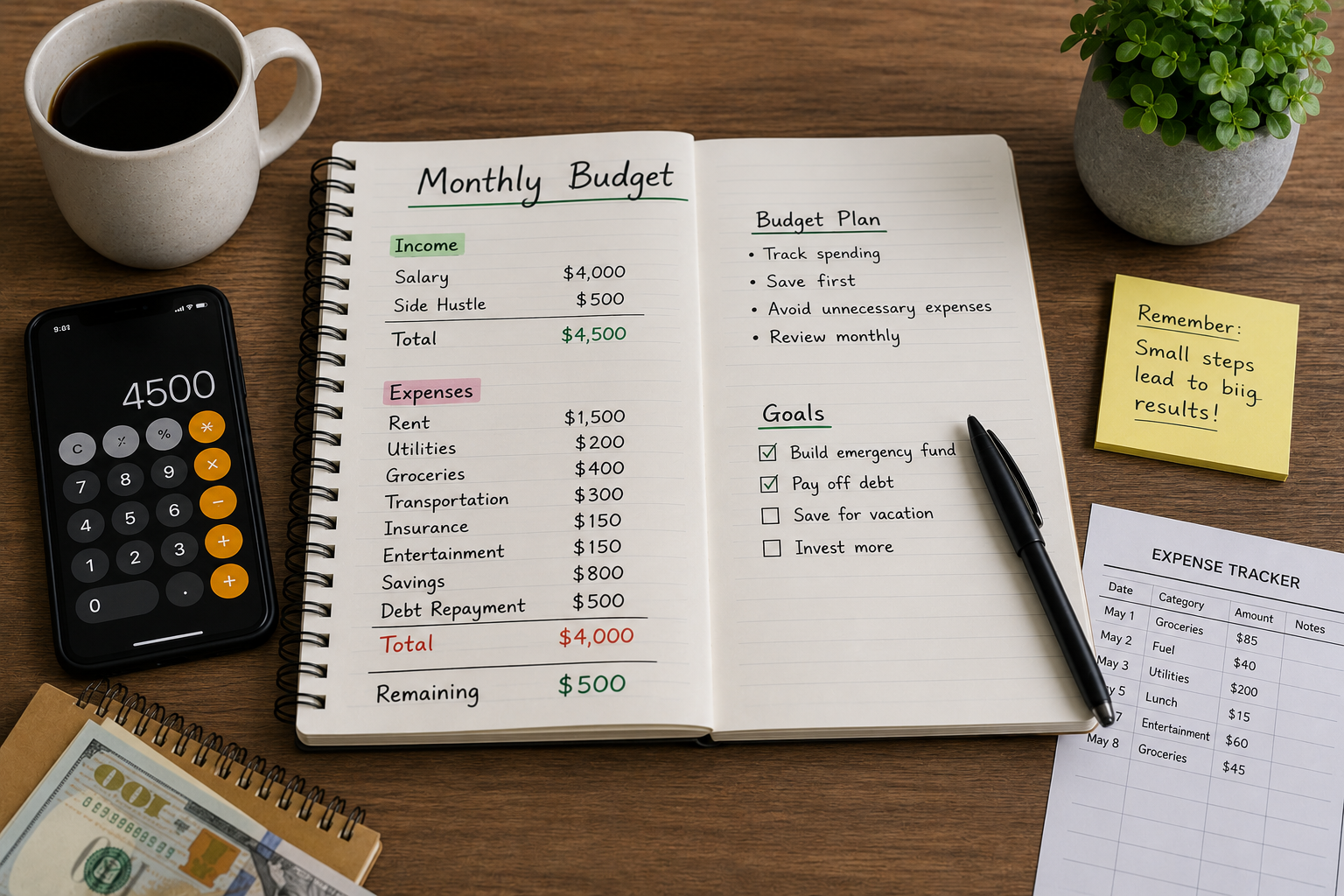
Many people view budgeting as a strict financial diet. They assume it means giving up everything they love, from daily coffees to dining out with friends. As a result, most beginners abandon their budgets within the very first month. They feel restricted, overwhelmed, and completely discouraged by the endless math.
However, a proper budget does not limit your personal freedom. Instead, it gives you total control over your economic future. create a monthly budget. It helps you assign a specific, powerful purpose to every single dollar you earn. A successful monthly budget bridges the gap between your current income and your long-term financial dreams.
If you are ready to stop living paycheck-to-paycheck, you need a systematic approach. Here is exactly how to create a monthly budget that actually works for your lifestyle.
1. Identify Your Core Financial Motivations
Budgeting without a clear purpose is like driving a car without a destination. You will quickly lose interest and return to old spending habits. Before you open a spreadsheet or download a personal finance app, you must define your personal financial goals.
Setting Concrete Targets
Ask yourself what financial freedom truly means to you right now. Your short-term and long-term targets might include:
- Wiping out stressful credit card balances or high-interest loans.
- Building a secure emergency shield to handle sudden career changes.
- Saving up a down payment for your first home or apartment.
- Funding a relaxing travel vacation without relying on new debt.
Write these motivations down on paper or keep them pinned on your phone’s home screen. create a monthly budget. Having a visual reminder of your goals makes it infinitely easier to resist impulsive shopping desires.
2. Calculate Your Exact Net Income
Many beginners make the classic mistake of budgeting based on their total gross salary. Your gross salary is the big number listed on your official employment contract. However, that is not the actual amount of liquid money that enters your bank account.
Focus on Your Take-Home Pay
To build a monthly budget that actually works, you must calculate your Net Income. This is your actual take-home pay after all mandatory deductions are removed. Look closely at your latest pay stubs and subtract:
- Federal, state, and local income taxes.
- Health, dental, or vision insurance premiums.
- Automated retirement contributions (like a 401k or pension plan).
If you work as a freelancer, independent contractor, or side-hustler, your monthly income fluctuates constantly. In this scenario, calculate your average net income from the past three to six months. Use your lowest-earning month as your safe baseline to avoid overspending.
3. Track and Categorize Your Real Expenses
You cannot fix a financial leak if you do not know where the water is coming from. Most people are completely shocked when they see where their money actually goes. create a monthly budget. Small digital subscriptions, casual online shopping, and daily food deliveries add up to massive amounts monthly.
Log Everything for 30 Days
Commit to tracking every single transaction for at least one full month. Do not leave out anything, no matter how tiny a purchase feels. You can track your spending through several reliable methods:
- Budgeting Apps: Connect your bank cards to secure tracking tools for automatic categorization.
- The Spreadsheet Method: Dedicate five minutes every evening to manually type your daily expenses into an Excel or Google Sheets template.
- The Notebook Method: Keep a pocket-sized notebook with you and physically write down every cash payment immediately.
Separate your expenses into fixed costs (like rent and insurance) and variable costs (like dining out and entertainment). This data builds intense financial awareness.
4. Choose a Budgeting Method That Fits Your Style
There is no single budgeting system that works perfectly for every individual. You must choose a framework that matches your personality and financial habits. Here are the three most successful methods for beginners:
The 50/30/20 Rule
This is the most popular, flexible framework for absolute beginners. You divide your net income into three simple blocks:
- 50% for Needs: Essential survival costs like rent, groceries, utilities, and minimum debt payments.
- 30% for Wants: Lifestyle choices like dining out, hobbies, movies, and travel.
- 20% for Savings: Building your emergency fund and investing for your future.
The Zero-Based Budget
This method requires you to give every single dollar a specific job until your income minus your expenses equals exactly zero. If you earn $4,000 a month, you allocate all $4,000 into categories, including savings and debt payoff. It is perfect for people who want absolute precision.
The Envelope System
This is a physical, cash-based system. You label paper envelopes with your variable spending categories (like groceries or entertainment). Fill them with a designated amount of physical cash at the start of the month. Once an envelope is empty, you cannot spend any more money in that category until the next month.
5. Pay Yourself First Through Automation
Human willpower is generally weak when facing modern consumer temptations. Marketers spend billions of dollars designing online platforms to encourage instant, friction-free spending. If you wait until the final day of the month to save what is left over, you will likely save nothing.
The ultimate solution to this human flaw is automation.
Log into your online banking portal or investment account today. Set up an automated recurring transfer for the exact day after your monthly paycheck arrives. Automatically move your designated savings straight into a separate account.
By automating this process, you learn to live comfortably on the remaining balance without feeling constant deprivation. What you do not see sitting in your checking account, you do not spend impulsively.
6. Build a Separate Emergency Shield
A budget that functions perfectly during normal times can easily collapse during an unexpected crisis. Sudden medical bills, unexpected car breakdowns, or rapid career shifts can throw your life into chaos. Without a dedicated financial cushion, these emergencies will force you right back into stressful debt cycles.
An emergency fund acts as your personal financial shield. It prevents you from touching your long-term investments during highly stressful situations.
Use a High-Yield Savings Account (HYSA)
Do not keep your emergency fund inside your everyday traditional checking account. It is too easy to accidentally spend it there on non-emergencies. Instead, open a separate High-Yield Savings Account (HYSA).
Reputable online banks pay significantly higher interest rates than traditional brick-and-mortar banks. This setup protects your emergency cash from inflation while keeping it fully accessible for real emergencies. Aim to accumulate three to six months of basic living expenses over time.
7. Review, Adjust, and Stay Flexible
A budget is not a rigid, permanent set of rules carved in stone. It is a living, breathing financial plan that must adapt to your changing life circumstances.
Schedule a Monthly Money Date
Set aside exactly 30 minutes on the final weekend of every month to review your budget. Check your actual spending against your initial targets. Ask yourself practical questions:
- Did I overspend on dining out this month? If yes, how can I adjust next month?
- Are there recurring digital subscriptions I forgot to use? Cancel them immediately.
- Did my income increase or decrease? Re-balance your budgeting proportions accordingly.
Do not feel discouraged if you fail to meet your budget targets during the first few months. Budgeting is a learned skill, much like learning to ride a bicycle. It takes time, adjustments, and practice to perfect your rhythm.
Final Thoughts: Progress Over Perfection
The ultimate goal of creating a monthly budget is not to make your life boring or restricted. It is about alignment. It ensures that your hard-earned money is actively supporting the things that bring genuine value and security to your life. Be kind to yourself during this learning process. Focus entirely on making small, disciplined financial choices repeated consistently week after week. By taking control of your budget today, you are giving your future self the ultimate gift of absolute financial peace of mind!
Best Places to Visit in the USA in 2026: The Ultimate Travel Guide
Amtrak