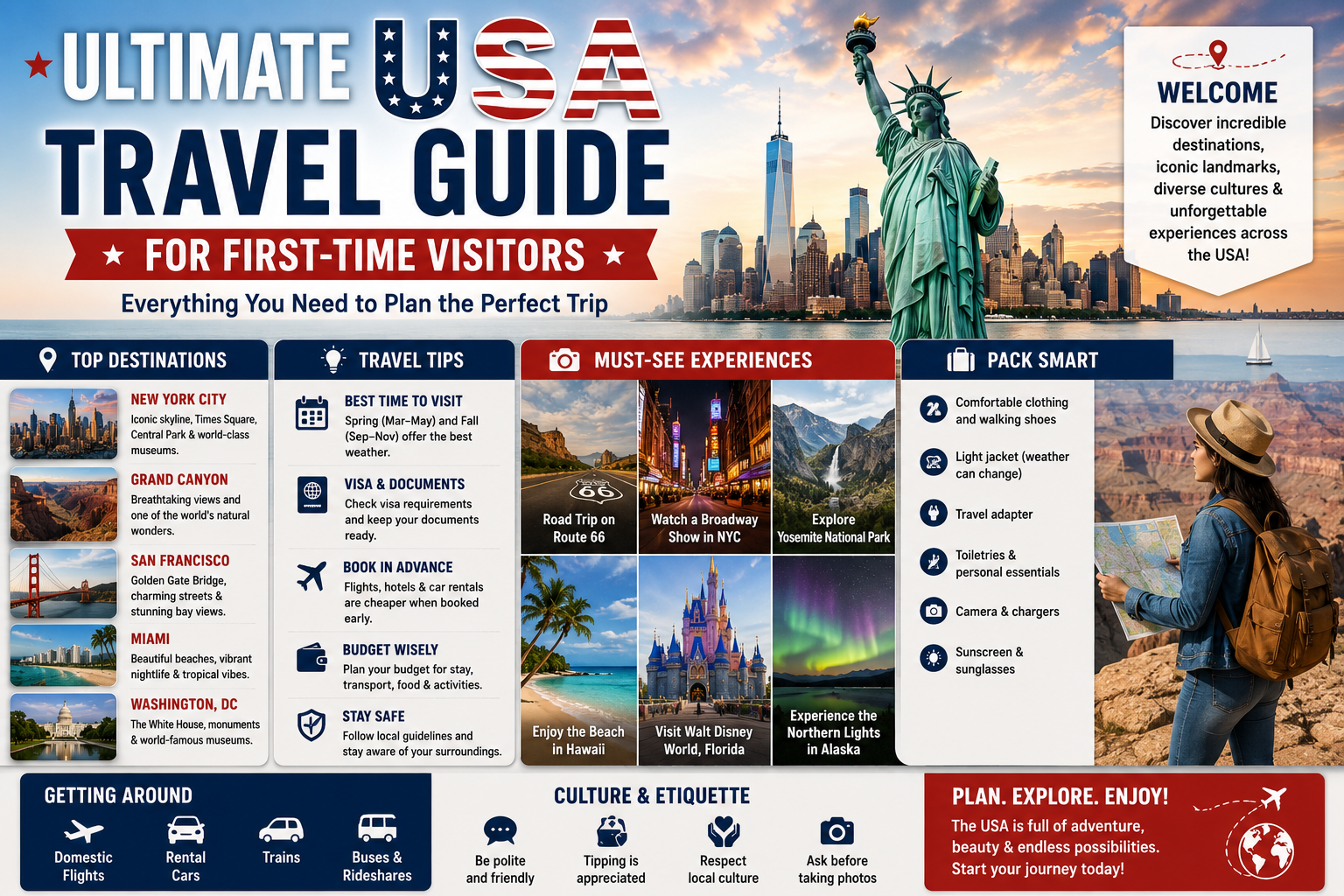
Traveling to the United States for the very first time is an incredibly exciting adventure. The USA is a massive, diverse, and beautiful country that spans nearly 4 million square miles. usa travel guide for first time visitors. It features everything from the neon lights of iconic cities and world-class theme parks to serene beaches and untouched national parks.
Because of its sheer size, planning a trip to America requires a bit of strategy. You cannot see the whole country in one go, and the local rules, transportation systems, and travel etiquette can be confusing for beginners.
This ultimate guide breaks down everything you need to know to plan a flawless first trip to the USA.
1. Choosing Your Regions: Don’t Over-Schedule
The biggest mistake first-time visitors make is trying to see New York City, the Grand Canyon, and Miami all in a single one-week trip. Traveling between these locations requires long domestic flights, which will leave you exhausted and drain your vacation time. usa travel guide for first time visitors.
Instead, pick one or two specific regions to explore deeply:
- The Northeast Corridor: Best for history, culture, and fast-paced urban life. You can easily jump between New York City, Boston, Philadelphia, and Washington, D.C., using Amtrak passenger trains without ever needing to rent a car.
- The West Coast: Perfect for ocean views, stunning national parks, and laid-back vibes. Popular itineraries include driving the Pacific Coast Highway in California, exploring the misty forests of the Pacific Northwest (Seattle and Portland), or visiting Yosemite.
- The Southwest Desert: Ideal for road trips and nature lovers. You can fly into Las Vegas or Phoenix and easily drive to the Grand Canyon, Zion National Park, and the red rocks of Sedona.
- The South: Great for music lovers and foodies. Think live country music in Nashville, jazz on the streets of New Orleans, or relaxing on the sunny beaches of Florida.
2. Essential Entry Requirements & Visas
Before you pack your bags, you need to ensure your paperwork is legally sorted out. The US government is very strict about entry requirements.
- The Passport Rule: Your passport must be valid for at least 6 months beyond your planned date of departure from the United States.
- ESTA (Visa Waiver Program): If you are a citizen of one of the 40+ countries participating in the Visa Waiver Program (like the UK, Australia, or parts of Europe), you do not need a traditional visa. Instead, you must apply for an ESTA (Electronic System for Travel Authorization) online at least 72 hours before your flight. It lasts for two years and allows stays up to 90 days.
- B1/B2 Tourist Visa: If your country is not part of the Visa Waiver Program, you will need to schedule an interview at a US Embassy or Consulate to obtain a standard visitor visa well in advance.
3. Navigating US Money, Taxes, and Tipping
Money works a little differently in the United States compared to Europe or Asia. Understanding these three rules will save you from awkward encounters:
The Tipping Culture
Tipping is not optional in the US; it is a vital part of how service workers earn their living. In sit-down restaurants, bars, and taxis, it is customary to tip between 15% to 20% of the total bill before tax. For hotel porters or valets, a cash tip of $2 to $5 is standard practice. You do not need to tip at fast-food chains or quick coffee counters.
Advertised Prices vs. Sales Tax
When you look at a price tag in a store or a menu in a restaurant, the price you see is not the final price you will pay. Sales tax is added at the cash register. Because sales tax varies wildly by state and city (usually between 5% to 10%), the final cost is calculated at checkout.
Card vs. Cash
The USA is highly digital. You can pay for almost everything—from a $2 coffee to a high-end dinner—using a credit card, debit card, or mobile payment apps like Apple Pay. However, it is always a smart idea to carry around $50 to $100 in physical cash for small emergencies, tips, or parking meters.
4. Transportation: How to Get Around
Because the USA is built around car culture, your transportation options depend entirely on where you decide to travel.
[ Major Cities (NYC/DC) ] ---> Use Trains & Subways (No Car Needed)
[ National Parks/Coast ]  ---> Rent a Car (Mandatory for Access)
[ Inter-City Travel ]     ---> Domestic Flights or Amtrak Trains
Renting a Car
If you are visiting national parks, rural areas, or states like Texas and Florida, renting a car is mandatory. To rent a car in the US, you typically need to be at least 21 years old (drivers under 25 often face extra fees), hold a valid driver’s license from your home country, and possess a major credit card.
Public Transit
In massive metropolitan hubs like New York City, Chicago, Boston, and Washington D.C., you should absolutely avoid renting a car. Traffic is heavy, and parking fees can cost up to $50 a day. Instead, utilize the highly efficient subway systems, walking paths, and rideshare apps like Uber and Lyft.
5. Staying Healthy and Insured
The United States possesses world-class medical facilities, but it also has the most expensive healthcare system on earth. A simple visit to an emergency room for a minor injury can easily cost thousands of dollars out of pocket.
Crucial Tip for First-Timers: Never travel to the United States without a comprehensive Travel Medical Insurance policy. Make sure your policy covers medical evacuation, emergency room visits, and trip cancellations. Keep a digital copy of your insurance card on your phone at all times.
6. Time Zones and Safety
Managing the Time Zones
The continental United States is divided into four main time zones: Eastern, Central, Mountain, and Pacific. When flying from New York (Eastern) to Los Angeles (Pacific), you will cross three time zones and gain 3 hours. Always double-check local times when booking connecting domestic flights or train rides.
Staying Safe
Generally speaking, the United States is a very safe place for tourists. However, like any major global destination, petty crime exists.
- In crowded tourist hotspots (like Times Square or downtown areas), keep an eye on your personal belongings to avoid pickpockets.
- If you are renting a car, never leave shopping bags, electronics, or luggage visible on the seats—always lock them safely out of sight in the trunk.
Essential Checklist for First-Time Visitors
To ensure you don’t miss a single detail before your flight takes off, use this quick checklist:
- [ ] Verify Passport Validity: Ensure your passport has at least 6 months of validity remaining.
- [ ] Apply for ESTA/Visa: Complete your online authorization application early.
- [ ] Purchase Travel Insurance: Secure a policy that fully covers US medical expenses.
- [ ] Notify Your Bank: Inform your bank that you are traveling to the US so they don’t lock your credit cards for suspicious overseas activity.
- [ ] Pack a US Plug Adapter: The US uses Type A and Type B plugs with a 120V voltage. You will need an adapter to charge your home electronics.
- [ ] Download Offline Apps: Download local subway maps, rideshare apps (Uber/Lyft), and offline Google Maps for easy navigation.
Final Thoughts: Embrace the Scale
The absolute best advice for a first-time visitor to the USA is to slow down and enjoy the local rhythm. Don’t rush through the landmarks just to cross them off a list. usa travel guide for first time visitors. Whether you are chatting with a friendly local at a classic Texas diner, watching the sunset over the Pacific Ocean, or taking in the architecture of a historic city, the real magic of America is found in the journey itself. Pack your bags, keep an open mind, and enjoy your very first American holiday!
Best Places to Visit in the USA in 2026: The Ultimate Travel Guide
Amtrak